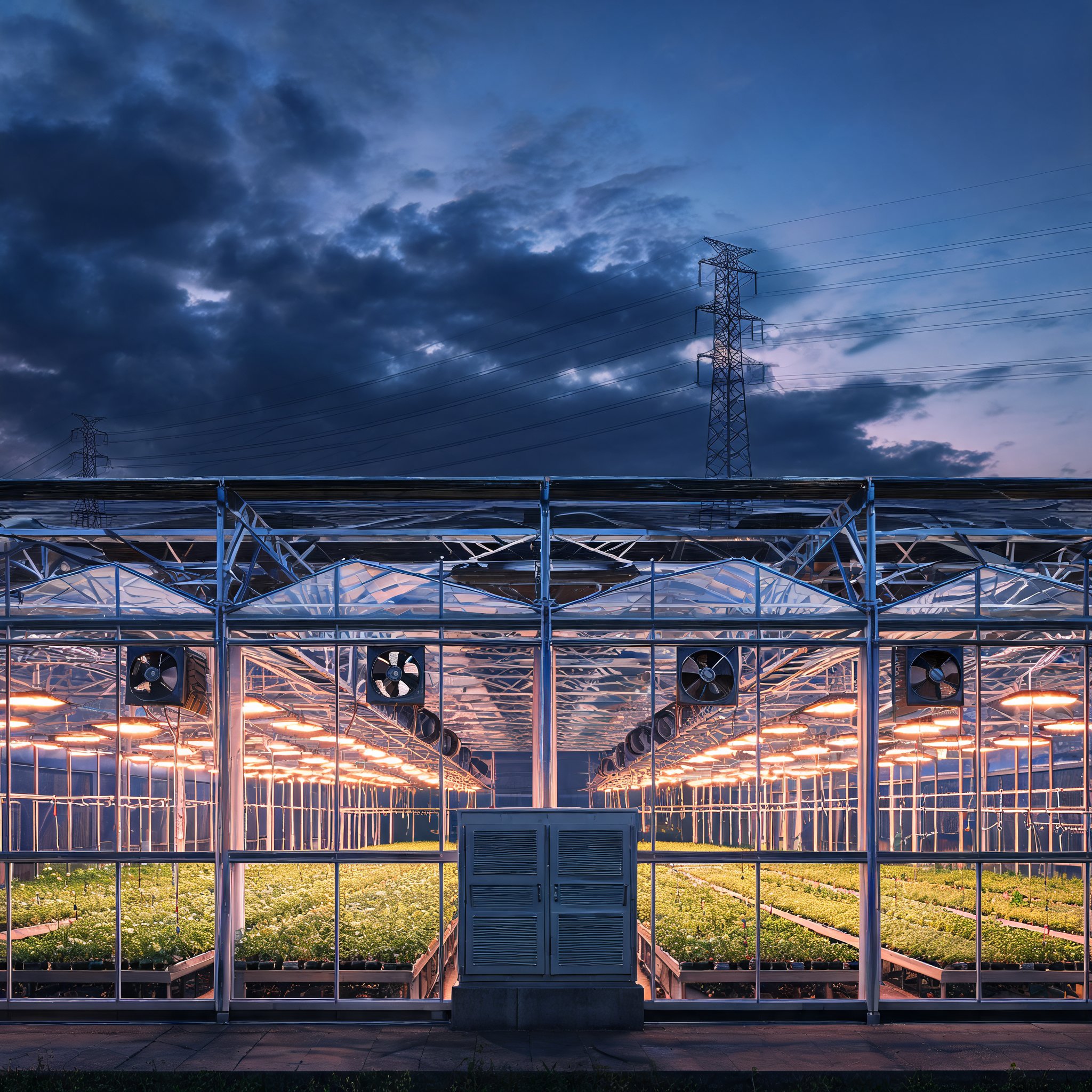
Greenhouse growers may have a rotating outage group printed on their utility bill, but it is easy to skip past. In California, the information appears directly on the bill; elsewhere, federal reliability standards, including NERC's EOP-011, still require grid operators to maintain emergency plans for cutting load. When those plans are used, power can be shut off systematically, often with only minutes of warning.
That risk matters for controlled-environment agriculture. A rolling outage can stop fans, pumps, irrigation, heating and environmental controls at the same time. Rolling outages have hit several regions in recent years during heat waves and winter storms, leaving greenhouses exposed at the worst possible time.
A plan turns an outage into a choice
Energy analyst Ian Knisely distinguishes an outage from a planned curtailment. In an outage, equipment stops at once. In a curtailment, the grower decides in advance which loads to drop, which to reduce and which to keep running to protect the crop.
A basic curtailment plan has four parts:
- List major equipment and estimate its power draw, including lighting, fans, cooling, heating, pumps, dehumidification, controls and cold storage.
- Sort loads into those that can be cut for hours, those that can be reduced—such as dimmed lights, staggered fans or adjusted setpoints—and those that must stay on, such as controls and alarms. The priority can change with crop and growth stage.
- Use forecasts and public grid alerts as triggers. In summer, pre-cool, irrigate early and close shade curtains before peak demand; in winter, heat ahead, close thermal curtains early and test backup heat.
- Assign who receives alerts, who decides and who acts. If the environmental controller can automate the sequence, program and test it.
The plan should show how many kilowatts a site can give up, for how long and at what cost to the crop. That figure is also the basis for demand response, under which utilities and grid operators pay customers to cut load on request. Such programs exist in most of the country and are meant to reduce the need for emergency outages.
For growers, the practical next step is to ask the utility where a site falls in its emergency plan, then build and test a greenhouse-specific plan before the next heat wave or cold snap.